
America was founded on enduring principles: liberty, equality, representative government, individual rights, and the rule of law. These ideas gave the nation its identity and inspired generations of citizens. Yet after 250 years, the country must ask whether its understanding of those principles remains suitable for the challenges it now faces.
Reconsidering a founding principle does not mean rejecting it. It means examining how that principle has been interpreted, applied, and sometimes limited. Liberty, for example, is central to American life, but liberty without responsibility can weaken the society that protects it. Citizens have rights, but they also have obligations to respect the law, participate in civic life, and protect the rights of others.
Equality also demands closer examination. The nation was founded on the declaration that all people are created equal, yet that promise was not extended equally at the beginning. American history has been shaped by efforts to close the distance between national ideals and lived reality. The question today is not whether equality matters, but whether laws, institutions, and opportunities reflect it fairly.
Representative government must also be reconsidered. Elected officials are expected to serve the public, but many citizens feel that political parties, wealthy interests, and personal ambition have gained too much influence. Representation becomes weaker when leaders stop listening, voters become disengaged, or public service becomes centred on winning rather than governing.
The rule of law remains another essential principle. Laws must apply fairly, regardless of wealth, status, influence, or political loyalty. When citizens believe that justice operates differently for different groups, confidence in democracy begins to decline.
America must also reconsider what citizenship requires. Voting is important, but citizenship includes far more. It requires knowledge, participation, careful judgment, and a willingness to hear views that challenge personal beliefs. A democracy cannot remain strong when citizens expect government to function while withdrawing from their own responsibilities.
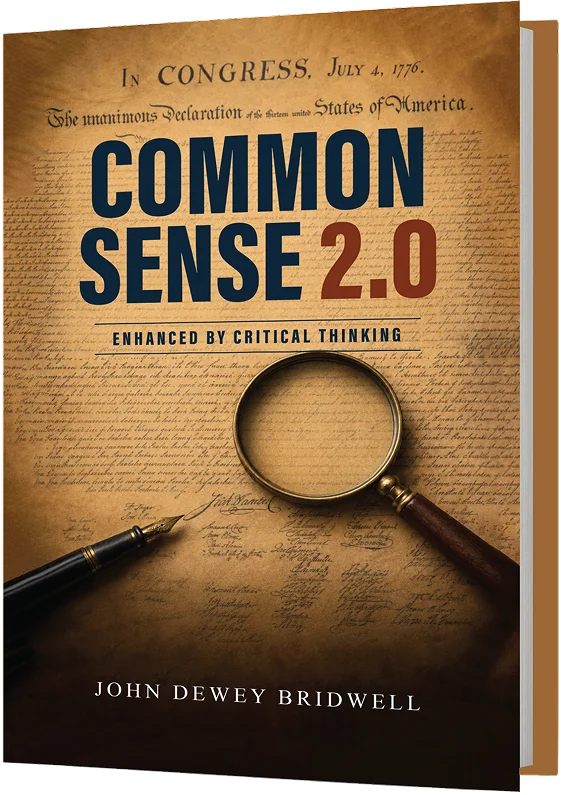
In Common Sense 2.0, John Dewey Bridwell examines the principles that shaped the United States and considers how they should guide the nation today. The book does not ask readers to abandon America’s founding ideals. It asks them to understand those ideals more honestly and apply them more effectively.
As America enters its next chapter, the nation must decide whether its founding principles will remain historical symbols or become active standards for public life. Common Sense 2.0 offers readers a timely opportunity to take part in that decision.
Discover this book now, available on Amazon: https://www.amazon.com/dp/B0H85CPT6G/