
Blog

Why the Pursuit of Happiness Is More Complicated Than It Sounds

The Pursuit of Happiness sounds simple. Everyone should be free to seek a satisfying life.

But what does that freedom require?

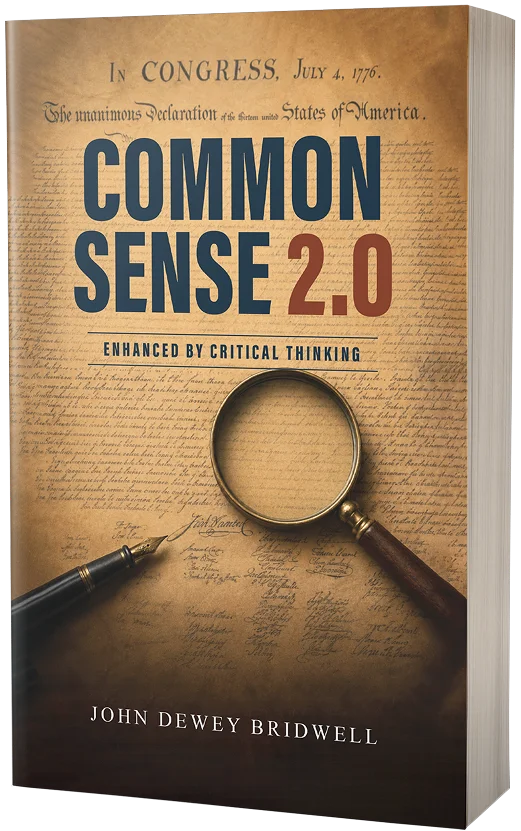
Common Sense 2.0 examines the Pursuit of Happiness as more than the freedom to chase personal ambitions. It asks readers to consider the conditions people need before that pursuit becomes genuinely possible.

A person may technically be free, but freedom alone does not guarantee opportunity. Someone without adequate health care, housing, education, employment, legal representation, or basic economic security may face serious barriers to building the life they want.

This makes the Pursuit of Happiness a much larger question about the relationship between individual rights and government responsibility.

The book connects this right with practical concerns such as education, health care, housing, employment, social security, cultural development, environmental protection, and support for people who cannot provide adequately for themselves.

That does not mean government can provide happiness.
Happiness is personal. Different people value different careers, relationships, beliefs, communities, and ways of living. Government cannot decide what should make an individual happy. It can, however, influence whether people have reasonable opportunities to pursue their own goals.

This distinction is important.

The Pursuit of Happiness is also connected to Equality, Life, and Liberty. These principles cannot always be separated neatly. A lack of equality can restrict opportunity. Threats to life and security can make personal advancement difficult. Liberty becomes less meaningful when people lack realistic choices.

Common Sense 2.0 therefore asks readers to think about these founding principles together rather than treating each one as an isolated promise.

The book also raises a difficult political question: If the Declaration of Independence identifies the Pursuit of Happiness as a fundamental right, what responsibility does government have to help protect the conditions that make its pursuit possible?

That question leads directly to the book’s concept of the American Democratic Mission.

Under this framework, government should be judged not only by its ability to preserve order, but also by how effectively it protects the fundamental rights of the people it serves.

More than two centuries after the Declaration of Independence, the Pursuit of Happiness remains an unfinished discussion.

Common Sense 2.0 invites readers to reconsider this familiar phrase and discover how much political, economic, and social responsibility may be contained within four seemingly simple words.

Read the book on Amazon: https://a.co/d/092tTEho
Why Rights Mean Little Without a Government Capable of Protecting Them

Rights can be written into declarations, constitutions, and laws. But words alone cannot protect anyone.

For rights to have practical meaning, there must be a government capable of securing them.

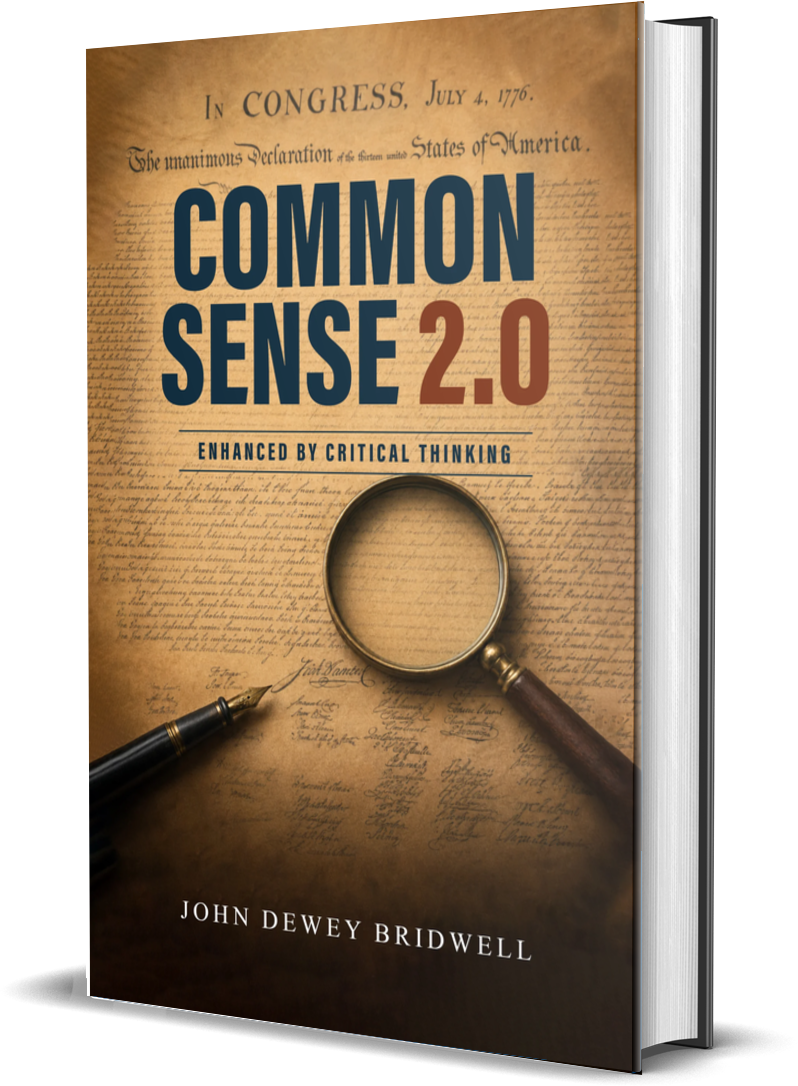
This idea is central to Common Sense 2.0. The book returns to the principles of the Declaration of Independence and asks what they require from government today. Equality, Life, Liberty, and the Pursuit of Happiness are not presented merely as inspiring ideals. They are standards by which government can be judged.

Consider equality. Declaring people equal means little if laws and institutions fail to protect them from discrimination or unequal treatment.

Liberty presents a similar challenge. People should be free to make choices about their own lives, but liberty cannot become permission to violate the rights of others. Government therefore has the difficult responsibility of protecting individual freedom while establishing reasonable limits when one person’s actions harm another.

The right to life also involves more than protection from direct violence. Common Sense 2.0 asks readers to consider broader conditions connected with human life, including health care, housing, education, employment, legal representation, social security, economic subsistence, and environmental protection.

The Pursuit of Happiness extends the discussion further. Government cannot guarantee that people will be happy, but it can influence whether they have meaningful opportunities to pursue fulfilling lives.

This is why effective government matters.

A society can proclaim admirable rights while failing to provide institutions capable of protecting them. Courts must administer justice. Legislatures must create laws consistent with democratic principles. Executive institutions must carry out those laws responsibly. Citizens must also be able to participate meaningfully in choosing the people who exercise political power.

Common Sense 2.0 brings these responsibilities together through the American Democratic Mission. The book argues that government has a duty to assure fundamental rights and that democratic authority must ultimately come from the people.

That creates an important standard for evaluating government.

The question is not simply whether a country calls itself democratic. The deeper question is whether its institutions actually protect the rights democracy promises.

When government fails to do so, citizens face another responsibility: correcting the system.

That may require better laws, stronger civic education, institutional reform, or even constitutional change. Preserving a political structure simply because it is old does not necessarily preserve the principles it was intended to serve.

Common Sense 2.0 challenges readers to look beyond declarations of rights and examine whether those rights are genuinely protected.

Because a right that exists only on paper is a promise waiting to be fulfilled.

Read the book on Amazon: https://a.co/d/092tTEho
Why Equality Remains an Unfinished American Project

Equality sits at the heart of the American promise, yet the country has never fully achieved it.

The Declaration of Independence announced that all people are created equal. Those words established a principle that would become central to the nation’s identity. But throughout American history, the reality has often fallen far short of the principle.

Common Sense 2.0 examines this gap between what America says it believes and how its institutions have actually treated people.

At different points in history, entire groups were denied rights that others enjoyed. Slavery, racial segregation, restrictions on voting, discrimination against women, and unequal treatment of minority groups all reveal how slowly the country has moved toward the equality it proclaimed at its founding.

Progress has certainly been made. Laws have changed. Voting rights have expanded. Discrimination has been challenged in courts, workplaces, schools, and public institutions.

Yet equality remains unfinished.

Modern questions involving race, gender, religion, sexual identity, economic opportunity, voting access, and political representation continue to test whether Americans truly believe that equal treatment should apply to everyone.

Common Sense 2.0 argues that equality should not depend on whether a person belongs to a favored group. Equal circumstances should result in equal treatment. Government should not permit discrimination based on religion, belief, political opinion, race, sex, or other personal characteristics.

This principle may sound straightforward, but putting it into practice has proven difficult.

Economic inequality creates another complication. The Declaration does not promise that everyone will possess the same amount of wealth. But extreme differences in wealth can affect access to health care, education, housing, legal representation, political influence, and other opportunities.

When some citizens have far greater access to power and resources than others, questions about equality become impossible to ignore.

This is where Common Sense 2.0 connects equality to its broader American Democratic Mission.

The book argues that equality cannot stand alone. It must operate alongside Life, Liberty, and the Pursuit of Happiness. Government has a responsibility to protect these rights and to create institutions that serve the people fairly.

Equality is therefore not a goal that America completed in the past.

It is a continuing national responsibility.

Every generation must decide whether the country will move closer to its founding principles or accept inequalities that contradict them.

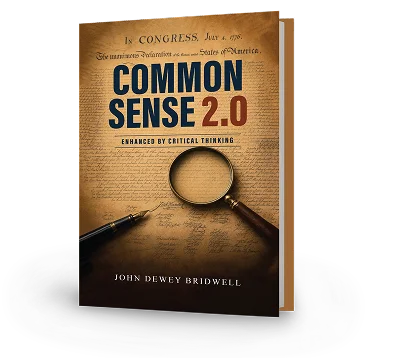
Common Sense 2.0 asks readers to reconsider what equality truly requires and whether America is prepared to treat that promise as a living obligation rather than a finished achievement.

Read the book on Amazon: https://a.co/d/092tTEho

What Does “Consent of the Governed” Actually Mean?

A government may have laws, courts, elected officials, and powerful institutions, but where does its authority actually come from?

The Declaration of Independence provides an answer: government receives its legitimate power from the consent of the governed.

In simple terms, political power belongs ultimately to the people. Government exists because citizens authorize it to act on their behalf. Leaders are not meant to rule simply because they hold office, possess wealth, or control powerful institutions.

Common Sense 2.0 treats this principle as an essential part of the American Democratic Mission.

Consent requires more than holding elections. For government to represent the governed, citizens must have a meaningful opportunity to choose their representatives and influence the institutions that exercise authority over them.

This raises difficult questions about the structure of American government.

Does every citizen have an equal voice in choosing national leaders? Does the Electoral College accurately reflect the will of voters? Does equal representation of states in the Senate provide citizens with equal political influence when state populations differ greatly? Should federal judges exercise enormous authority when citizens do not elect them?

These are not merely technical questions about government. They go directly to the meaning of democratic consent.

Common Sense 2.0 argues that America should examine its institutions against the principles expressed in the Declaration of Independence. If government derives its authority from the people, then its structure should reflect that principle as fully as possible.

Consent also depends on informed participation.

Citizens cannot effectively direct their government if they do not understand their rights, responsibilities, political institutions, and choices. This makes civic education and critical thinking essential to democracy. Voting matters, but understanding what is being voted for matters as well.

There is another important dimension to consent. The Declaration does not suggest that people surrender permanent control once a government has been established. When government fails to protect fundamental rights and democratic principles, citizens retain the responsibility to correct it.

That idea is central to Common Sense 2.0.

The book asks readers to reconsider whether American institutions adequately express the will of the people and whether reforms are necessary to bring government closer to its founding democratic purpose.

“Consent of the governed” is therefore more than a famous phrase from 1776. It is a continuing test of political legitimacy.

Who holds the power? Who chooses those who exercise it? Whose interests does government serve? And what can citizens do when the system no longer reflects their consent?

Common Sense 2.0 brings those questions into the present and challenges readers to consider what government by the people should truly mean.

Read the book on Amazon: https://a.co/d/092tTEho

What Does Equality Really Require From Government?

Equality is one of the most familiar American ideals. It is also one of the most difficult to define in practice. The Declaration of Independence states that all people are created equal. Yet equality does not mean that everyone will have the same income, education, abilities, opportunities, or life experiences. It means that people should be treated with the same basic dignity and should not be denied rights because of race, religion, sex, political belief, or other personal characteristics.

For government, that creates a serious responsibility.

Equality requires laws that apply fairly. It requires access to voting, legal protection, education, public services, and opportunities without discrimination. It also requires government to examine whether certain groups face barriers that prevent them from participating fully in society.

That does not mean every person must receive identical treatment in every situation. Fairness sometimes requires recognizing different circumstances. A person with a disability may need accommodations. A family facing poverty may require assistance that a wealthy family does not need. Equal treatment is not always the same as identical treatment.

The harder question is where government responsibility should end. Some people believe government should focus mainly on protecting legal equality and preventing discrimination. Others argue that true equality also requires action when large differences in wealth, education, health care, housing, or opportunity prevent people from exercising their rights in meaningful ways.

This disagreement sits at the center of many political debates. What should remain clear is that equality cannot survive as an empty phrase. If it is one of the nation’s founding principles, citizens must be willing to ask whether laws, institutions, and public policies actually support it.

John Dewey Bridwell explores this question in Common Sense 2.0: Enhanced by Critical Thinking. The book examines America’s founding principles and develops what Bridwell calls the American Democratic Mission, a framework for understanding how government should protect Equality, Life, Liberty, and the Pursuit of Happiness.

Rather than treating equality as a finished achievement, the book presents it as an ongoing national responsibility. America has made important progress, but every generation must decide whether that progress is continuing.

The real test of equality is not how often a nation speaks about it. It is how seriously that nation is willing to practice it.

America at 250: What Have We Learned Since 1776?

Two hundred and fifty years after the Declaration of Independence, America has much to celebrate. It also has much to examine.

In 1776, the country declared not only its independence from Britain but also a set of principles that would define its purpose. Equality, Life, Liberty, and the Pursuit of Happiness became part of the nation’s foundation. Government was expected to protect those rights and to operate with the consent of the governed.

Since then, America has changed in ways the founders could not have imagined.

The nation survived civil war, abolished slavery, expanded voting rights, built powerful institutions, developed a vast economy, and became a major force in world affairs. Civil rights protections widened. Public education expanded. Programs such as Social Security, Medicare, and Medicaid became part of American life. Millions gained opportunities that earlier generations had been denied.

But history also shows how difficult it has been to live up to the principles announced in 1776.

Equality has often been delayed or denied. Political representation remains disputed. Economic inequality continues to shape opportunity. Debates over health care, voting, immigration, education, gun rights, and personal liberty reveal deep disagreements about what government owes its citizens.

One lesson from the past 250 years is that progress does not happen automatically. Rights can expand, but they can also be challenged. Democratic institutions can endure, but they can also weaken. Laws can improve society, but they can also fail to address problems created by changing times.

Another lesson is that founding documents should not be treated as objects beyond examination. Respect for history should not prevent careful judgment. A democracy remains healthy when citizens are willing to ask whether institutions still serve the people and whether government continues to reflect the principles on which the nation was founded.

This question lies at the heart of John Dewey Bridwell’s Common Sense 2.0: Enhanced by Critical Thinking. Looking across 250 years of American history, Bridwell examines where the country has advanced, where it has fallen short, and what might be required to bring its government closer to its founding promises. Central to the book is the American Democratic Mission, a framework for connecting the ideals of 1776 with the responsibilities of modern government.

America’s 250th anniversary should be more than a celebration of survival. It should be a moment of national reflection. The most important question is not only how far America has come since 1776. It is whether the country is still willing to keep moving toward the principles it declared at its beginning.

Why Democracy Depends on Informed Voters

Democracy gives citizens the power to choose their leaders, but that power works only when voters understand the choices before them.

Casting a ballot is not enough by itself. Voters must know what candidates stand for, how government works, what rights are being protected, and what consequences may follow from political decisions. Without that knowledge, elections can be shaped by slogans, fear, misinformation, personal loyalty, or habit rather than careful judgment.

An informed voter asks questions.

Does a policy strengthen individual rights? Does it treat citizens fairly? Does it serve the public or mainly benefit a narrow group? Does an elected official respect democratic institutions? Are claims supported by evidence? What will a decision mean not only today, but years from now?

These questions matter because democracy depends on consent. Government receives its legitimacy from the people, but meaningful consent requires understanding. A citizen cannot make a fully informed political choice without some knowledge of history, law, public policy, and the responsibilities of government.

Civic education therefore matters enormously.

Students should learn more than dates, names, and documents. They should understand why the Declaration of Independence was written, what Equality, Life, Liberty, and the Pursuit of Happiness mean in practice, and why government must remain accountable to the people.

Critical thinking is equally important. Voters are constantly exposed to political advertising, speeches, social media posts, opinion programs, and campaign promises. Some information is accurate. Some is misleading. Some is designed mainly to provoke anger or loyalty.

The ability to examine evidence, compare claims, recognize manipulation, and reconsider long held assumptions is essential to responsible citizenship.

John Dewey Bridwell addresses this problem directly in Common Sense 2.0: Enhanced by Critical Thinking. Drawing on 250 years of American history, the book argues that citizens need a clearer understanding of the principles behind American democracy and the responsibilities that follow from them.

Bridwell presents the American Democratic Mission as a way of connecting the nation’s founding ideals with modern political choices. The approach asks voters to judge government by fundamental principles rather than simply by party labels.

Democracy cannot protect itself automatically. Its strength depends on citizens who understand what is at stake, question what they are told, and recognize when government moves away from the principles it is supposed to serve. An informed electorate is therefore not merely helpful to democracy. It is one of democracy’s most important safeguards.

Can a Nation Have a Mission Statement?

Businesses use mission statements to define what they stand for, what they hope to accomplish, and how they intend to serve the people who depend on them. The same idea can be applied to a nation.

A country may not use the term mission statement, but it still needs a clear sense of purpose. Without one, laws, institutions, and political decisions can drift away from the principles they were meant to serve.

For the United States, that purpose can be traced to the Declaration of Independence.

The Declaration established more than a break from British rule. It identified principles that gave meaning to the new nation. Equality, Life, Liberty, and the Pursuit of Happiness were presented as fundamental rights. Government was given the responsibility of securing those rights, and its authority was to come from the consent of the governed.

Those ideas can be viewed as the foundation of a national mission.

A mission statement would not replace the Constitution or the law. Instead, it would provide a standard by which both could be judged. It would ask whether public institutions are protecting rights, serving citizens fairly, and remaining accountable to the people.

That kind of standard becomes especially important when political disagreements grow intense. Parties may disagree about taxes, health care, education, immigration, environmental policy, or the role of government. Yet those debates should still be connected to a larger question: What is the country trying to achieve for its people?

A national mission can also help citizens evaluate progress. If equality is part of the mission, then discrimination and unequal treatment deserve attention. If liberty is part of the mission, then personal freedom must be protected while respecting the rights of others. If the Pursuit of Happiness matters, then Americans must consider the conditions that allow people to live secure and meaningful lives.

John Dewey Bridwell develops this idea in Common Sense 2.0: Enhanced by Critical Thinking. The book proposes what he calls the American Democratic Mission, a framework built around the founding principles of the Declaration of Independence and the responsibilities that follow from them.

The purpose is not to reduce a complicated country to a slogan. It is to give Americans a clearer way to think about where the nation is going and whether its institutions are helping it get there.

A mission statement cannot solve every political problem.

But a country that understands its purpose is in a stronger position to recognize when it has lost its way. And for America, the starting point may already have been written in 1776.

Why Political Labels Often Prevent Meaningful Conversation

Political labels are meant to simplify ideas, but they often make honest conversation more difficult. Words such as liberal, conservative, progressive, and traditional can describe broad beliefs, yet they rarely explain everything a person thinks. Once a label is applied, people may stop listening and begin making assumptions.

A political label can turn an individual into a category. Instead of asking why someone holds a certain view, others may decide that they already know the answer. The person is judged by the reputation of a group rather than by the reasoning behind the opinion. This reduces complex issues to opposing teams and leaves little room for careful thought.

Labels also encourage people to defend positions they may not fully support. Party loyalty can become more important than personal judgment. Citizens may feel pressured to agree with every policy associated with their political side, even when they have doubts. Over time, independent thinking becomes weaker and public discussion becomes more predictable.

Meaningful conversation requires curiosity. It begins when people ask questions, listen carefully, and recognise that political beliefs are often shaped by personal experience. Two citizens may want the same outcome, such as safer communities, stronger schools, or greater economic security, while disagreeing about how to achieve it. Labels can hide those shared concerns.

Political language becomes especially harmful when disagreement is treated as evidence of bad character. A person who supports a different policy is not automatically ignorant, dishonest, or disloyal. Democracy depends on the ability to debate ideas without denying the dignity of those who hold them.

Removing labels from every discussion may not be possible, but citizens can refuse to let them control the conversation. They can focus on specific issues, ask what evidence supports a claim, and consider whether an idea is useful rather than whether it belongs to the correct political group.

In Common Sense 2.0, John Dewey Bridwell examines the condition of American democracy and the habits that prevent citizens from working together. The book encourages readers to move beyond automatic political reactions and consider the principles, responsibilities, and practical choices that can guide the nation forward.

America does not need complete agreement. It needs better conversation. Common Sense 2.0 invites readers to look past political labels, think independently, and take part in a more responsible national discussion.

Discover this book now, available on Amazon: https://www.amazon.com/dp/B0H85CPT6G/

Five Lessons America Can Learn from Its Own History

America’s history is filled with achievement, conflict, sacrifice, and change. Across 250 years, the nation has faced wars, political division, economic hardship, injustice, and periods of deep uncertainty. Each generation has inherited both the progress and the unfinished work of those who came before it. By studying that history honestly, Americans can better understand the choices that will shape the country’s future.

The first lesson is that democracy requires constant protection. Democratic institutions do not remain strong simply because they were established long ago. They depend on citizens who vote, stay informed, question authority, and hold elected officials accountable. When public participation declines, power becomes easier to misuse.

The second lesson is that national progress often begins with ordinary people. Many important reforms were not freely offered by those in authority. They were demanded by citizens who organised, spoke out, challenged unfair laws, and refused to accept injustice as permanent. Lasting change usually begins when people recognise that they have a responsibility to act.

The third lesson is that political division can cause serious harm. Americans have always disagreed about government, rights, economics, and national identity. Debate can strengthen democracy, but hostility can weaken it. When political opponents are treated as enemies, compromise becomes difficult and public trust begins to disappear.

The fourth lesson is that freedom must be shared fairly. American history shows that liberty loses its meaning when it is protected for some people but denied to others. The nation has moved closer to its founding ideals by expanding rights and opportunities, but that work remains incomplete. Equal treatment under the law must be more than a promise.

The fifth lesson is that the nation can correct its course. America has made serious mistakes, but history also shows its capacity for reform. Progress becomes possible when citizens confront failure honestly, learn from it, and demand better leadership and stronger institutions.

In Common Sense 2.0, John Dewey Bridwell examines the lessons found within America’s democratic mission and 250 year history. The book considers where the nation has succeeded, where it has fallen short, and what practical choices may guide it forward.

America’s future will depend on whether its citizens repeat the mistakes of history or learn from them. Common Sense 2.0 invites readers to take part in that important national conversation.

Discover this book now, available on Amazon: https://www.amazon.com/dp/B0H85CPT6G/