
Rights can be written into declarations, constitutions, and laws. But words alone cannot protect anyone.
For rights to have practical meaning, there must be a government capable of securing them.
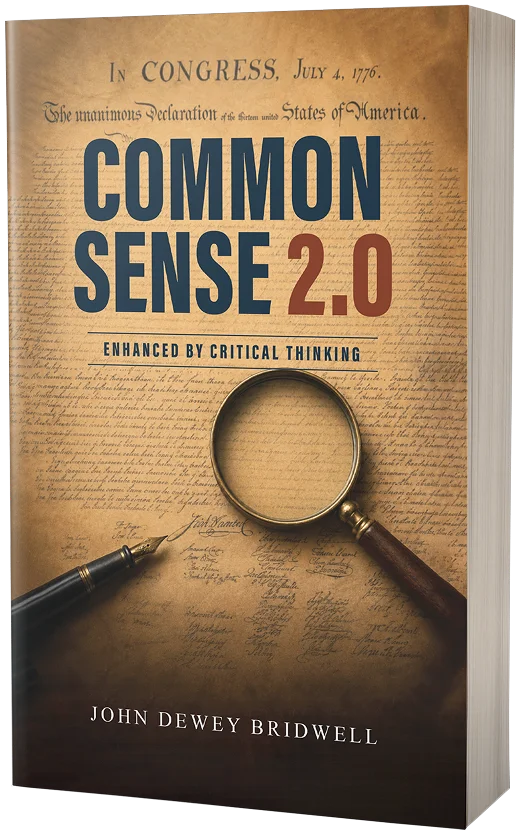
This idea is central to Common Sense 2.0. The book returns to the principles of the Declaration of Independence and asks what they require from government today. Equality, Life, Liberty, and the Pursuit of Happiness are not presented merely as inspiring ideals. They are standards by which government can be judged.
Consider equality. Declaring people equal means little if laws and institutions fail to protect them from discrimination or unequal treatment.
Liberty presents a similar challenge. People should be free to make choices about their own lives, but liberty cannot become permission to violate the rights of others. Government therefore has the difficult responsibility of protecting individual freedom while establishing reasonable limits when one person’s actions harm another.
The right to life also involves more than protection from direct violence. Common Sense 2.0 asks readers to consider broader conditions connected with human life, including health care, housing, education, employment, legal representation, social security, economic subsistence, and environmental protection.
The Pursuit of Happiness extends the discussion further. Government cannot guarantee that people will be happy, but it can influence whether they have meaningful opportunities to pursue fulfilling lives.
This is why effective government matters.
A society can proclaim admirable rights while failing to provide institutions capable of protecting them. Courts must administer justice. Legislatures must create laws consistent with democratic principles. Executive institutions must carry out those laws responsibly. Citizens must also be able to participate meaningfully in choosing the people who exercise political power.
Common Sense 2.0 brings these responsibilities together through the American Democratic Mission. The book argues that government has a duty to assure fundamental rights and that democratic authority must ultimately come from the people.
That creates an important standard for evaluating government.
The question is not simply whether a country calls itself democratic. The deeper question is whether its institutions actually protect the rights democracy promises.
When government fails to do so, citizens face another responsibility: correcting the system.
That may require better laws, stronger civic education, institutional reform, or even constitutional change. Preserving a political structure simply because it is old does not necessarily preserve the principles it was intended to serve.
Common Sense 2.0 challenges readers to look beyond declarations of rights and examine whether those rights are genuinely protected.
Because a right that exists only on paper is a promise waiting to be fulfilled.
Read the book on Amazon: https://a.co/d/092tTEho