
Equality sits at the heart of the American promise, yet the country has never fully achieved it.
The Declaration of Independence announced that all people are created equal. Those words established a principle that would become central to the nation’s identity. But throughout American history, the reality has often fallen far short of the principle.
Common Sense 2.0 examines this gap between what America says it believes and how its institutions have actually treated people.
At different points in history, entire groups were denied rights that others enjoyed. Slavery, racial segregation, restrictions on voting, discrimination against women, and unequal treatment of minority groups all reveal how slowly the country has moved toward the equality it proclaimed at its founding.
Progress has certainly been made. Laws have changed. Voting rights have expanded. Discrimination has been challenged in courts, workplaces, schools, and public institutions.
Yet equality remains unfinished.
Modern questions involving race, gender, religion, sexual identity, economic opportunity, voting access, and political representation continue to test whether Americans truly believe that equal treatment should apply to everyone.
Common Sense 2.0 argues that equality should not depend on whether a person belongs to a favored group. Equal circumstances should result in equal treatment. Government should not permit discrimination based on religion, belief, political opinion, race, sex, or other personal characteristics.
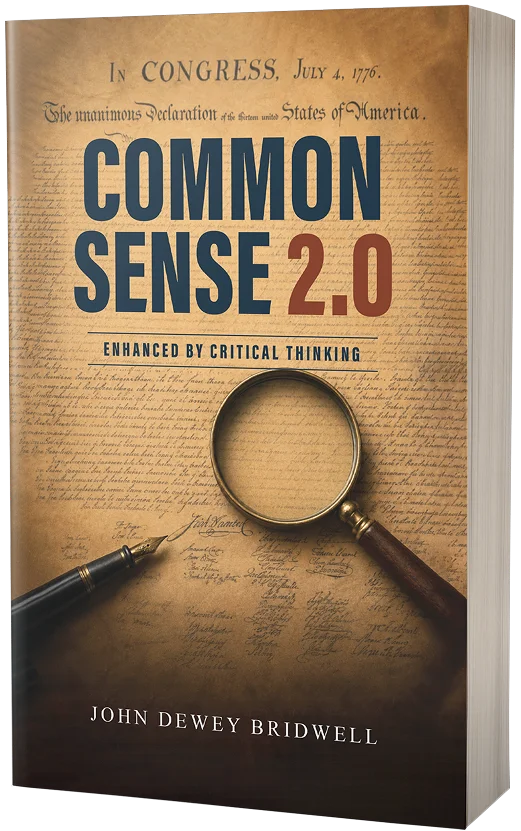
This principle may sound straightforward, but putting it into practice has proven difficult.
Economic inequality creates another complication. The Declaration does not promise that everyone will possess the same amount of wealth. But extreme differences in wealth can affect access to health care, education, housing, legal representation, political influence, and other opportunities.
When some citizens have far greater access to power and resources than others, questions about equality become impossible to ignore.
This is where Common Sense 2.0 connects equality to its broader American Democratic Mission.
The book argues that equality cannot stand alone. It must operate alongside Life, Liberty, and the Pursuit of Happiness. Government has a responsibility to protect these rights and to create institutions that serve the people fairly.
Equality is therefore not a goal that America completed in the past.
It is a continuing national responsibility.
Every generation must decide whether the country will move closer to its founding principles or accept inequalities that contradict them.
Common Sense 2.0 asks readers to reconsider what equality truly requires and whether America is prepared to treat that promise as a living obligation rather than a finished achievement.
Read the book on Amazon: https://a.co/d/092tTEho