
America was founded on a promise that government should serve the people, protect their rights, and remain answerable to the governed. In Common Sense 2.0: Enhanced by Critical Thinking, that promise is examined through what the book calls the American Democratic Mission. One important part of that mission is the separation of church and state.
The book presents this issue as more than a legal debate. It frames it as a matter of equality. When government language, public schools, official ceremonies, pledges, mottos, or civic spaces favor one faith, citizens outside that faith are placed in a lesser position. A democracy cannot fully protect equality while allowing government to give symbolic preference to one religious belief over another.
This is why the book argues that any movement of church into state activity creates inequality. A public office, courtroom, school, or national pledge should belong equally to every citizen. That includes Christians, Jews, Muslims, Hindus, atheists, agnostics, and people of every other belief system. The state should not ask citizens to feel like guests in their own country because their private faith does not match the language of government.
The book also makes a wider point. When a nation places too much responsibility on divine will, it may weaken its own sense of human duty. Problems such as injustice, poverty, violence, discrimination, and failing institutions require action from people. The American Democratic Mission, as presented in the book, insists that government must do the work of securing rights, not merely speak in moral language while avoiding responsibility.
This view does not attack religion. Instead, it protects religion by keeping government from controlling it, using it, or turning it into a political tool. Faith remains strongest when it is freely chosen, not endorsed by the state. Democracy remains strongest when it treats all citizens with equal public standing.
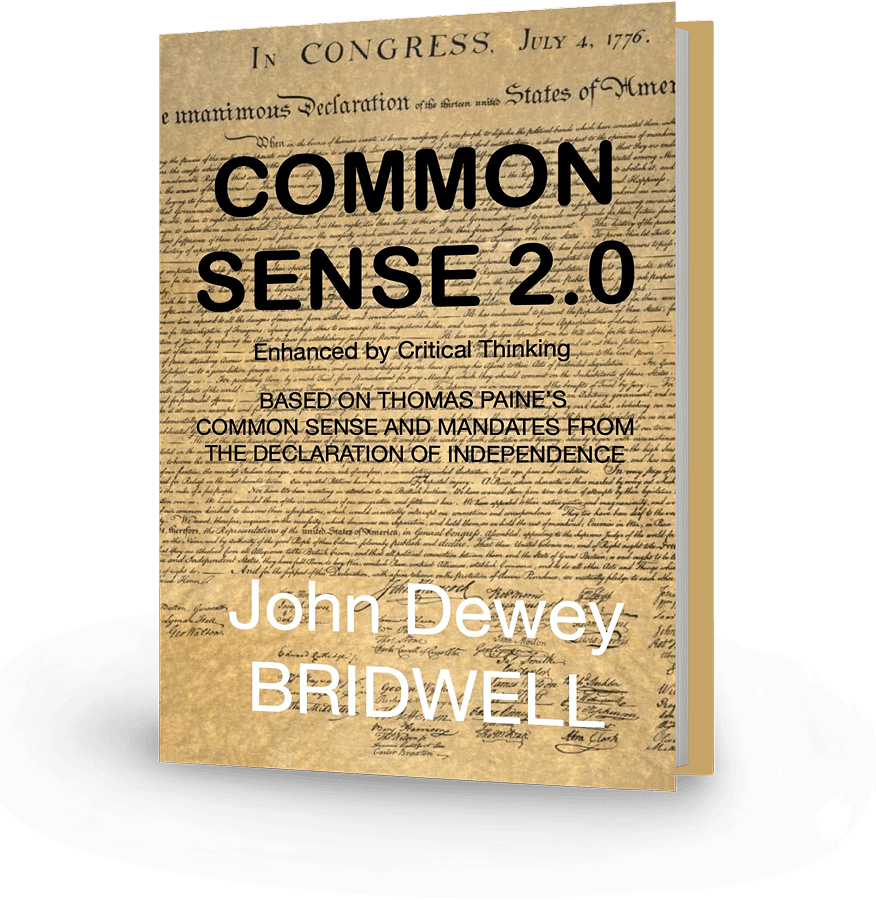
Common Sense 2.0 challenges readers to look again at the founding words of America and ask whether modern government truly follows them. Its discussion of church and state is part of a larger call for civic clarity. The book asks readers to think beyond habit, slogans, and inherited assumptions. It invites them to consider what equality, liberty, democracy, and public responsibility should mean in practice.
For readers interested in politics, American history, constitutional reform, civic education, and the future of democracy, this book offers a direct and thought provoking argument. It calls for a renewed national commitment to rights, reason, and government by the people.
Read Common Sense 2.0: Enhanced by Critical Thinking to explore how America’s founding principles can be reexamined, strengthened, and applied to the challenges facing the country today.
Discover this book now, available on Amazon: https://www.amazon.com/dp/B0GNCKMC5H/