
Trust is the foundation of any functioning democracy. When government institutions are manipulated or corrupted, citizens lose faith not only in leadership but in the ability of those institutions to uphold the rights promised in the Declaration of Independence. Common Sense 2.0 by John Bridwell explores the consequences of political corruption and outlines practical ways to rebuild confidence in government.
The first step in restoring trust is transparency. Citizens must have access to clear, accurate information about government decisions, spending, and policies. When leaders hide actions or manipulate agencies for personal or partisan gain, as highlighted in the book, public skepticism grows. By adopting transparent practices, governments demonstrate accountability and reinforce the principle that power exists to serve the people.
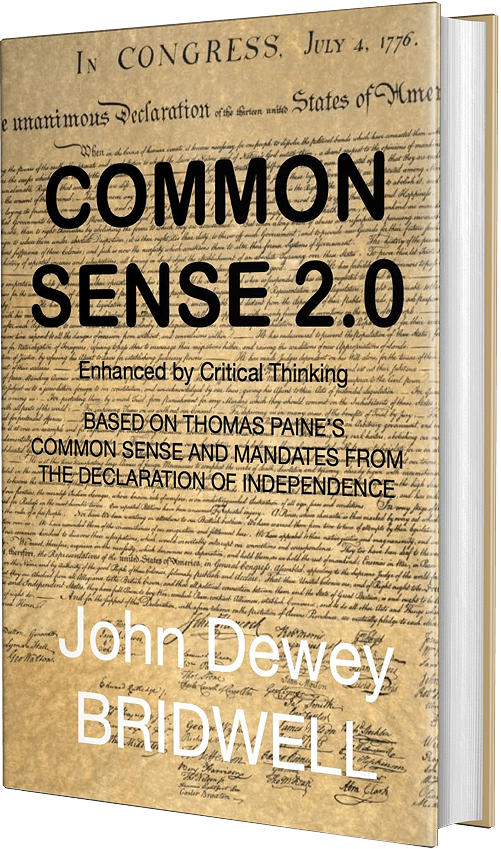
Next, the enforcement of rules and ethical standards is crucial. Common Sense 2.0 examines how the misuse of executive authority, courts, and law enforcement can weaponize government against its citizens. Reestablishing impartial oversight, ensuring laws are applied consistently, and holding officials accountable for violations are essential steps in demonstrating that institutions are guided by fairness rather than personal interest.
Citizen engagement is another key factor. A government that encourages participation and values informed voters reinforces trust. Civic education, public forums, and mechanisms for feedback allow citizens to hold officials accountable and influence policy. The book emphasizes that a well-informed electorate is a safeguard against corruption, making transparency and engagement mutually reinforcing.
Structural reforms also play a significant role. This may include revising outdated systems, such as the Electoral College, ensuring checks and balances are effective, and reforming processes that allow power to concentrate excessively. Common Sense 2.0 draws on historical lessons to show that systems designed for accountability and balance are more resilient against corruption and inspire confidence in the public.
Finally, leadership must embody integrity. Citizens are more likely to trust institutions when leaders act consistently with democratic values, uphold the law, and prioritize the collective good over personal gain. The book highlights that rebuilding trust is a long-term commitment requiring consistent ethical behavior, adherence to principles, and visible efforts to correct past mistakes.
By combining transparency, enforcement of ethical standards, active citizen engagement, structural reform, and principled leadership, trust in government can be restored. Common Sense 2.0 provides a detailed roadmap for these actions, connecting historical insight to contemporary challenges. It demonstrates that while corruption can undermine democracy, deliberate, sustained efforts can revive confidence in institutions, protect citizens’ rights, and uphold the values that make a free society possible.
For anyone concerned about the state of democracy and the resilience of government institutions, Common Sense 2.0 is essential reading. It offers both a critique of current failures and a guide for practical restoration, ensuring that America’s democratic mission can endure for generations to come.
Discover this book now, available on Amazon: https://www.amazon.com/dp/B0GNCKMC5H/