
Equality is one of the most familiar American ideals. It is also one of the most difficult to define in practice. The Declaration of Independence states that all people are created equal. Yet equality does not mean that everyone will have the same income, education, abilities, opportunities, or life experiences. It means that people should be treated with the same basic dignity and should not be denied rights because of race, religion, sex, political belief, or other personal characteristics.
For government, that creates a serious responsibility.
Equality requires laws that apply fairly. It requires access to voting, legal protection, education, public services, and opportunities without discrimination. It also requires government to examine whether certain groups face barriers that prevent them from participating fully in society.
That does not mean every person must receive identical treatment in every situation. Fairness sometimes requires recognizing different circumstances. A person with a disability may need accommodations. A family facing poverty may require assistance that a wealthy family does not need. Equal treatment is not always the same as identical treatment.
The harder question is where government responsibility should end. Some people believe government should focus mainly on protecting legal equality and preventing discrimination. Others argue that true equality also requires action when large differences in wealth, education, health care, housing, or opportunity prevent people from exercising their rights in meaningful ways.
This disagreement sits at the center of many political debates. What should remain clear is that equality cannot survive as an empty phrase. If it is one of the nation’s founding principles, citizens must be willing to ask whether laws, institutions, and public policies actually support it.
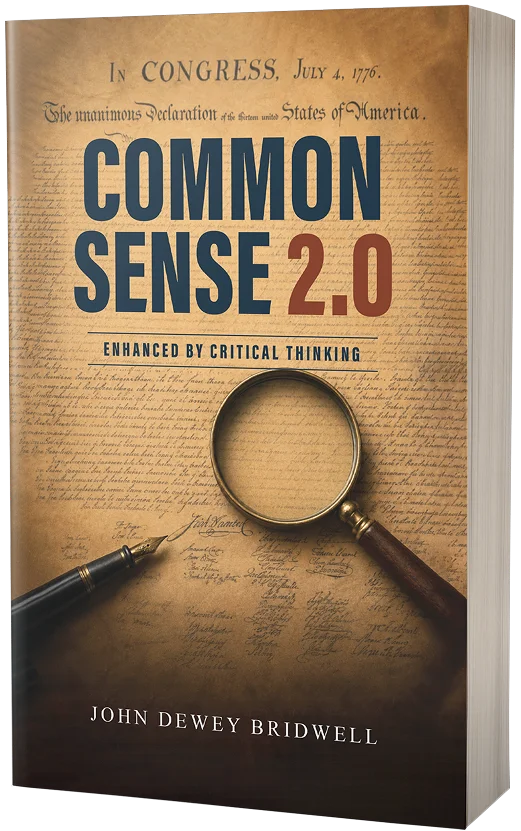
John Dewey Bridwell explores this question in Common Sense 2.0: Enhanced by Critical Thinking. The book examines America’s founding principles and develops what Bridwell calls the American Democratic Mission, a framework for understanding how government should protect Equality, Life, Liberty, and the Pursuit of Happiness.
Rather than treating equality as a finished achievement, the book presents it as an ongoing national responsibility. America has made important progress, but every generation must decide whether that progress is continuing.
The real test of equality is not how often a nation speaks about it. It is how seriously that nation is willing to practice it.