
A government may have laws, courts, elected officials, and powerful institutions, but where does its authority actually come from?
The Declaration of Independence provides an answer: government receives its legitimate power from the consent of the governed.
In simple terms, political power belongs ultimately to the people. Government exists because citizens authorize it to act on their behalf. Leaders are not meant to rule simply because they hold office, possess wealth, or control powerful institutions.
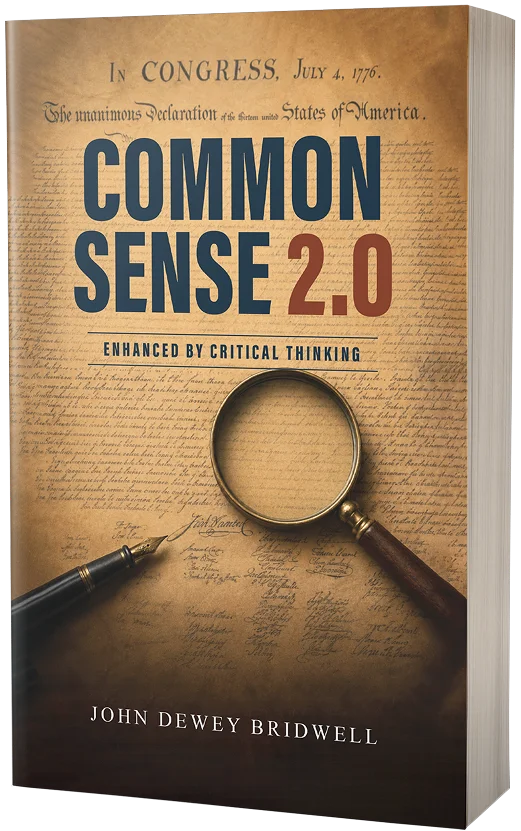
Common Sense 2.0 treats this principle as an essential part of the American Democratic Mission.
Consent requires more than holding elections. For government to represent the governed, citizens must have a meaningful opportunity to choose their representatives and influence the institutions that exercise authority over them.
This raises difficult questions about the structure of American government.
Does every citizen have an equal voice in choosing national leaders? Does the Electoral College accurately reflect the will of voters? Does equal representation of states in the Senate provide citizens with equal political influence when state populations differ greatly? Should federal judges exercise enormous authority when citizens do not elect them?
These are not merely technical questions about government. They go directly to the meaning of democratic consent.
Common Sense 2.0 argues that America should examine its institutions against the principles expressed in the Declaration of Independence. If government derives its authority from the people, then its structure should reflect that principle as fully as possible.
Consent also depends on informed participation.
Citizens cannot effectively direct their government if they do not understand their rights, responsibilities, political institutions, and choices. This makes civic education and critical thinking essential to democracy. Voting matters, but understanding what is being voted for matters as well.
There is another important dimension to consent. The Declaration does not suggest that people surrender permanent control once a government has been established. When government fails to protect fundamental rights and democratic principles, citizens retain the responsibility to correct it.
That idea is central to Common Sense 2.0.
The book asks readers to reconsider whether American institutions adequately express the will of the people and whether reforms are necessary to bring government closer to its founding democratic purpose.
“Consent of the governed” is therefore more than a famous phrase from 1776. It is a continuing test of political legitimacy.
Who holds the power? Who chooses those who exercise it? Whose interests does government serve? And what can citizens do when the system no longer reflects their consent?
Common Sense 2.0 brings those questions into the present and challenges readers to consider what government by the people should truly mean.
Read the book on Amazon: https://a.co/d/092tTEho