
Democracy gives citizens the power to choose their leaders, but that power works only when voters understand the choices before them.
Casting a ballot is not enough by itself. Voters must know what candidates stand for, how government works, what rights are being protected, and what consequences may follow from political decisions. Without that knowledge, elections can be shaped by slogans, fear, misinformation, personal loyalty, or habit rather than careful judgment.
An informed voter asks questions.
Does a policy strengthen individual rights? Does it treat citizens fairly? Does it serve the public or mainly benefit a narrow group? Does an elected official respect democratic institutions? Are claims supported by evidence? What will a decision mean not only today, but years from now?
These questions matter because democracy depends on consent. Government receives its legitimacy from the people, but meaningful consent requires understanding. A citizen cannot make a fully informed political choice without some knowledge of history, law, public policy, and the responsibilities of government.
Civic education therefore matters enormously.
Students should learn more than dates, names, and documents. They should understand why the Declaration of Independence was written, what Equality, Life, Liberty, and the Pursuit of Happiness mean in practice, and why government must remain accountable to the people.
Critical thinking is equally important. Voters are constantly exposed to political advertising, speeches, social media posts, opinion programs, and campaign promises. Some information is accurate. Some is misleading. Some is designed mainly to provoke anger or loyalty.
The ability to examine evidence, compare claims, recognize manipulation, and reconsider long held assumptions is essential to responsible citizenship.
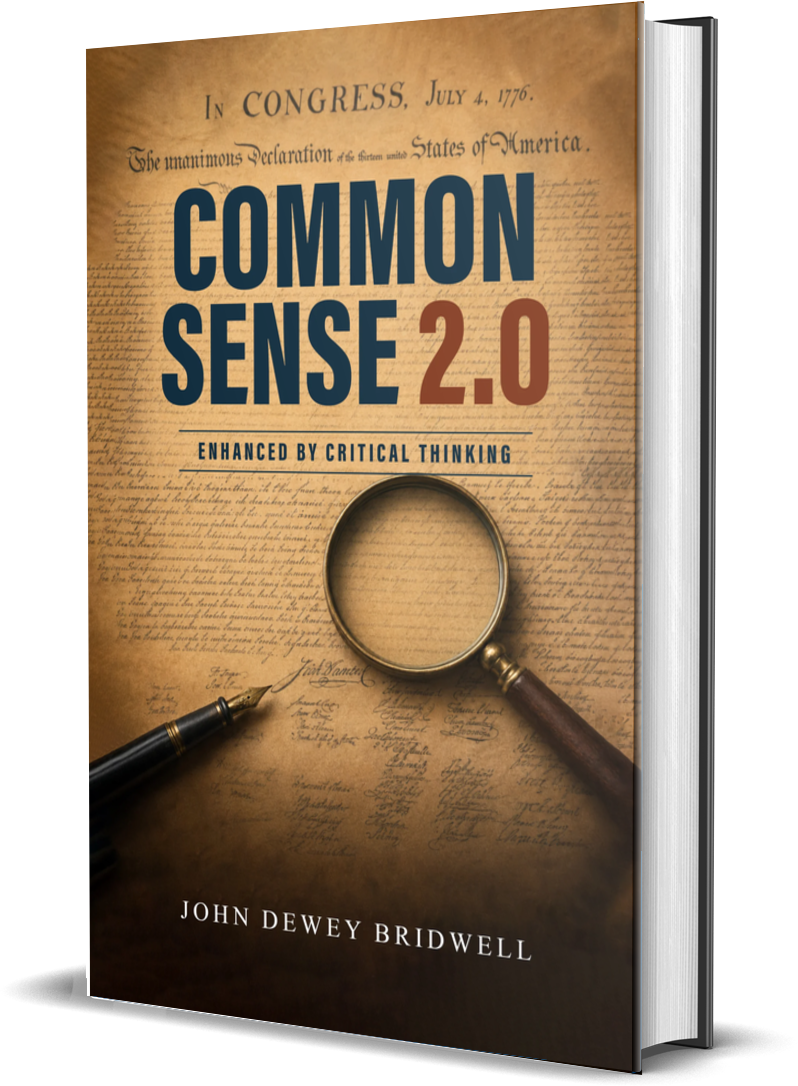
John Dewey Bridwell addresses this problem directly in Common Sense 2.0: Enhanced by Critical Thinking. Drawing on 250 years of American history, the book argues that citizens need a clearer understanding of the principles behind American democracy and the responsibilities that follow from them.
Bridwell presents the American Democratic Mission as a way of connecting the nation’s founding ideals with modern political choices. The approach asks voters to judge government by fundamental principles rather than simply by party labels.
Democracy cannot protect itself automatically. Its strength depends on citizens who understand what is at stake, question what they are told, and recognize when government moves away from the principles it is supposed to serve. An informed electorate is therefore not merely helpful to democracy. It is one of democracy’s most important safeguards.