
Political labels are meant to simplify ideas, but they often make honest conversation more difficult. Words such as liberal, conservative, progressive, and traditional can describe broad beliefs, yet they rarely explain everything a person thinks. Once a label is applied, people may stop listening and begin making assumptions.
A political label can turn an individual into a category. Instead of asking why someone holds a certain view, others may decide that they already know the answer. The person is judged by the reputation of a group rather than by the reasoning behind the opinion. This reduces complex issues to opposing teams and leaves little room for careful thought.
Labels also encourage people to defend positions they may not fully support. Party loyalty can become more important than personal judgment. Citizens may feel pressured to agree with every policy associated with their political side, even when they have doubts. Over time, independent thinking becomes weaker and public discussion becomes more predictable.
Meaningful conversation requires curiosity. It begins when people ask questions, listen carefully, and recognise that political beliefs are often shaped by personal experience. Two citizens may want the same outcome, such as safer communities, stronger schools, or greater economic security, while disagreeing about how to achieve it. Labels can hide those shared concerns.
Political language becomes especially harmful when disagreement is treated as evidence of bad character. A person who supports a different policy is not automatically ignorant, dishonest, or disloyal. Democracy depends on the ability to debate ideas without denying the dignity of those who hold them.
Removing labels from every discussion may not be possible, but citizens can refuse to let them control the conversation. They can focus on specific issues, ask what evidence supports a claim, and consider whether an idea is useful rather than whether it belongs to the correct political group.
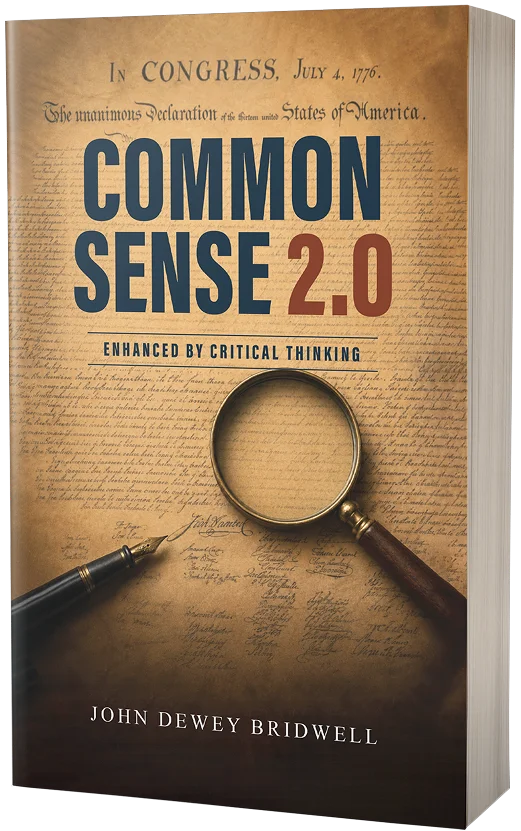
In Common Sense 2.0, John Dewey Bridwell examines the condition of American democracy and the habits that prevent citizens from working together. The book encourages readers to move beyond automatic political reactions and consider the principles, responsibilities, and practical choices that can guide the nation forward.
America does not need complete agreement. It needs better conversation. Common Sense 2.0 invites readers to look past political labels, think independently, and take part in a more responsible national discussion.
Discover this book now, available on Amazon: https://www.amazon.com/dp/B0H85CPT6G/